
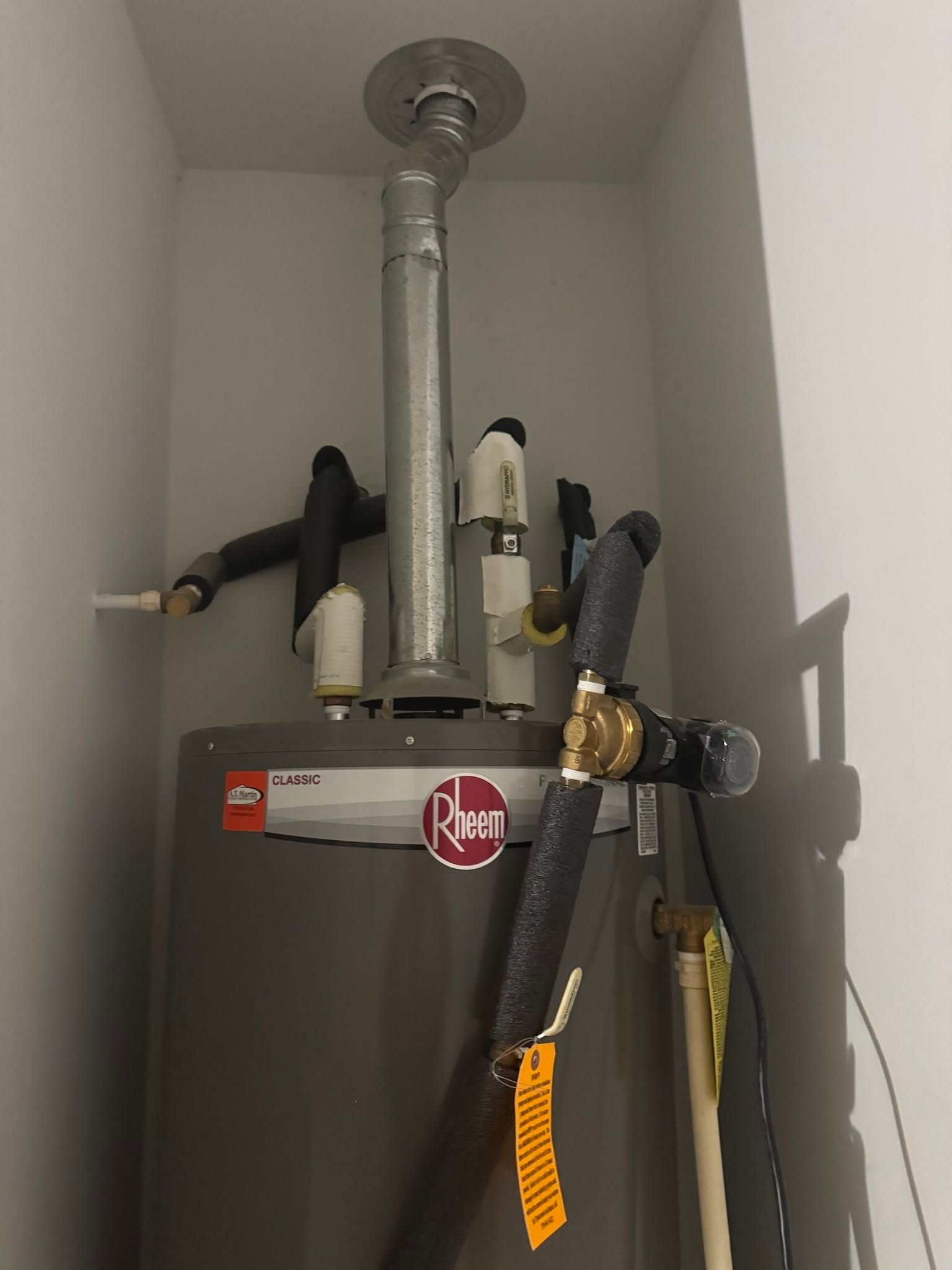
Tank Failures That Stop Hot Water Completely
Water Heater Installation and Repair in Jasper for aging units that show sediment buildup or tank corrosion
Snoe's Plumbing diagnoses water heater failures before recommending replacement, carrying parts on the truck for same-visit repair or installation across Jasper and the North Georgia foothills. Homes in this area average 20 to 40 years old, and tank-type heaters accumulate sediment faster due to local water quality, which accelerates corrosion and reduces heating efficiency. When the unit stops producing hot water, leaks at the base, or makes loud popping sounds during heating cycles, the technician inspects the anode rod, heating elements, and tank lining to determine whether repair extends the system's life or whether replacement prevents imminent failure.
Diagnostic inspection reveals whether the issue stems from a faulty thermostat, a corroded dip tube, or sediment accumulation that insulates the burner from the water. Common parts—thermocouples, gas control valves, heating elements, and pressure relief valves—stay stocked for immediate replacement, which means most repairs finish the same day without scheduling a return visit.
Request a diagnostic inspection to identify whether your water heater requires component replacement or full installation.
What Happens During Water Heater Service
The technician tests water temperature at multiple taps, checks gas or electrical connections, and drains a sample from the tank to assess sediment concentration. Heavy sediment buildup forces the burner or elements to run longer, increasing energy cost and shortening the tank's remaining service life. If the anode rod shows complete deterioration, corrosion attacks the steel tank directly, and replacement becomes the only option to prevent a catastrophic leak.
After installation, you notice consistent water temperature across all fixtures, faster recovery time when multiple people shower, and no rumbling or banging sounds from the tank during heating cycles. The new unit operates without the sediment insulation that caused the old heater to cycle constantly, and pressure relief valve drips stop completely once proper expansion control is restored.
Installation includes code-compliant venting for gas models, proper expansion tank sizing, and shut-off valve upgrades where old galvanized fittings show corrosion. The work carries a labor warranty that covers installation workmanship, and the technician verifies proper ignition, thermostat calibration, and pressure relief operation before completing the job.
Questions Before Replacing Your Water Heater
Property owners throughout the North Georgia foothills ask about repair viability and replacement timing, particularly when sediment buildup affects performance in older tank-type units.
How do you decide between repair and replacement for a failing water heater?
The technician evaluates the unit's age, the extent of tank corrosion, and whether sediment buildup has caused permanent damage to heating elements or the tank lining. If the system is over 12 years old and shows rust-colored water or base leaks, replacement prevents imminent failure and water damage.
What size water heater do I need for a home in Jasper?
Sizing depends on the number of bathrooms, occupancy patterns, and whether you run high-demand appliances simultaneously. Most three-bedroom homes in the area use 40- to 50-gallon tanks, but homes with larger families or soaking tubs may require 75-gallon units or tankless systems to meet peak demand without running out of hot water.
Why does sediment build up faster in North Georgia water heaters?
Local water quality contains higher mineral content, which settles at the tank bottom and hardens over time. This sediment layer insulates the burner or heating elements from the water, forcing longer heating cycles and creating popping sounds as steam bubbles escape through the buildup.
Can you install the new water heater the same day you remove the old one?
If the replacement unit matches the existing fuel type and venting configuration, installation finishes the same day. The technician stocks common residential tank sizes and has parts on the truck for gas line connections, venting upgrades, and expansion tank installation.
What happens if the water heater leaks at the base?
Base leaks indicate tank corrosion that cannot be repaired. The steel lining has failed, and continued operation risks flooding. Immediate replacement prevents water damage to flooring, drywall, and adjacent rooms, particularly in homes with finished basements or water heaters located in interior closets.
Snoe's Plumbing handles both emergency water heater failures and planned replacements for aging units across Jasper, and the diagnostic-first approach prevents unnecessary replacement when component repair restores full function. Arrange an inspection to determine whether your system requires repair or installation based on current tank condition and performance.