Lines That Drain Without Backup or Odor
Sewer Line Repair in Jasper for blocked drains caused by root intrusion, cracked cast iron, and settling in aging North Georgia sewer systems
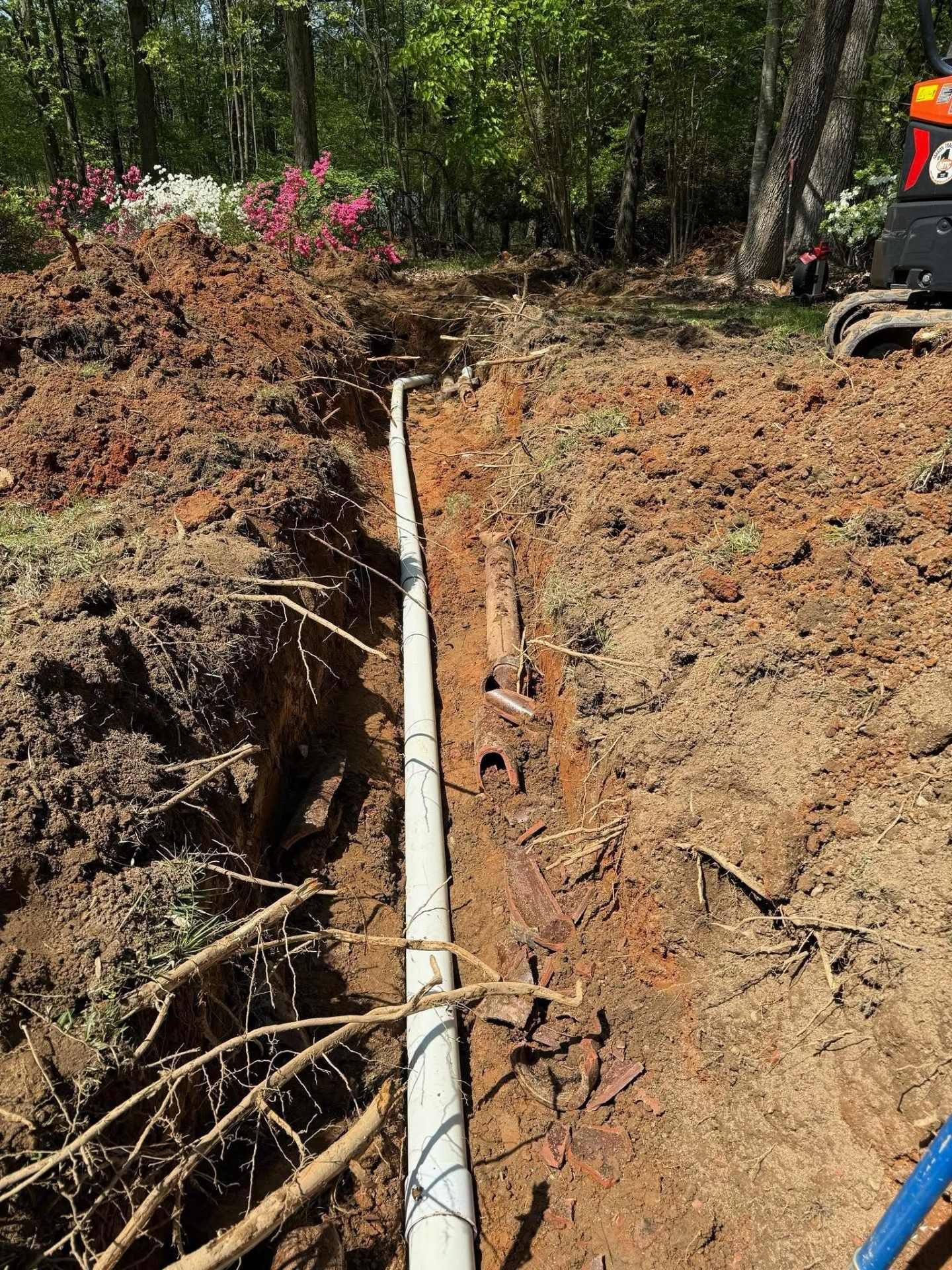
Cast iron and clay sewer lines installed thirty to fifty years ago in the Jasper area now show cracks, root intrusion, and misalignment from soil settling common in the North Georgia foothills. Snoe's Plumbing uses sewer camera inspection through the cleanout to locate breaks, blockages, and root penetration points before recommending spot repair or full line replacement. Homes in Pickens and Cherokee County often have sewer laterals that run under mature trees, where roots migrate into joints and cracks seeking moisture, eventually filling the pipe and causing slow drainage or complete backup.
The camera scope identifies damage type—root intrusion, pipe corrosion, joint separation, or bellied sections where the line has sagged. Spot repair involves trenching to the damaged section and replacing the affected length, while full replacement becomes necessary when multiple failure points exist or the pipe material has deteriorated beyond patchwork. Permits and city inspection coordination are handled as part of the service, ensuring compliance with local code requirements for depth, material, and connection standards.
Arrange an on-site camera inspection to identify the exact location and cause of your sewer line issue before excavation begins.
What Sewer Camera Inspection Reveals
Camera inspection shows the interior condition of the sewer line in real time, revealing whether blockage comes from roots, grease buildup, collapsed pipe, or offset joints where sections have separated. The footage identifies the distance from the cleanout to the problem area, which determines trench location and minimizes unnecessary digging. Cherokee County sewer laterals frequently show root intrusion at the joint seams of clay pipe, where gaps allow fine root hairs to enter and expand into dense mats that catch waste and toilet paper.
Once repair or replacement is complete, you'll notice drains empty quickly without gurgling sounds, toilets flush with full siphon action, and no sewer odor appears in the yard or basement. Trench work is backfilled and compacted to prevent settling, and the new line is pressure-tested before inspection to confirm no leaks exist at connection points.
Spot repair addresses isolated damage without replacing the entire lateral, but full replacement is recommended when camera footage shows widespread corrosion or multiple breaks along the run. The approach depends on pipe age, material type, and the number of failure points identified during inspection.
Common Questions Before Sewer Line Work
Sewer line issues bring up specific concerns for homeowners in the North Georgia foothills, especially when drainage problems appear suddenly or worsen over time.
What does a sewer camera inspection actually show?
The camera reveals pipe material, interior blockages, cracks, root intrusion, and joint offsets—recorded footage shows exactly where the problem exists and how far from the cleanout, which determines repair scope and trench location.
How do roots get into sewer lines in the first place?
Roots enter through joints, cracks, or connection points in older clay and cast iron pipe as they seek moisture; once inside, they expand and create dense mats that catch debris and eventually block the line completely.
When is spot repair sufficient instead of full line replacement?
Spot repair works when the camera shows isolated damage in one section and the rest of the pipe is structurally sound—full replacement becomes necessary when multiple breaks exist or the pipe material shows advanced corrosion throughout the lateral.
Why do Jasper-area homes have frequent sewer line problems?
Homes built with clay or cast iron sewer laterals in the 1970s and earlier now face age-related failure from corrosion, root intrusion, and soil movement in the North Georgia foothills, where mature tree roots and settling from seasonal moisture changes stress aging pipe.
What happens during the permit and inspection process?
Snoe's Plumbing handles permit application with the local jurisdiction, coordinates inspection scheduling after the new line is installed and backfilled, and ensures all work meets depth, material, and connection code requirements before final approval.
Snoe's Plumbing coordinates permits, manages inspection scheduling, and provides labor warranty on completed sewer line work in the Pickens and Cherokee County residential corridor. Schedule a camera inspection to assess your sewer lateral condition and determine whether targeted repair or full replacement addresses the drainage issue permanently.